Key takeaways
- Jasmine tea is usually green tea scented with jasmine blossoms; plain green tea has no added scent.
- Both contain caffeine, since jasmine tea is typically made with a green tea base.
- Brew jasmine green tea at about 175–185°F (80–85°C) for 2 to 3 minutes.
- Real jasmine tea is scented with blossoms, not just flavored with oil, so check the ingredients.
Jasmine tea is typically green tea that has been scented with jasmine blossoms, while plain green tea has only the taste of the leaf itself. Because jasmine tea is usually made on a green tea base, both contain caffeine and brew at similar temperatures, around 175–185°F (80–85°C). The difference you taste is the floral, perfumed aroma of jasmine.
This guide compares them in detail, explains how jasmine tea is made, and helps you pick and brew a good one.
What is green tea?
Green tea is made from Camellia sinensis leaves that are heated soon after picking to prevent oxidation, which keeps them green. The flavor is typically fresh, grassy, nutty or marine depending on the type. For a broader introduction, see our complete guide to tea.
What is jasmine tea?
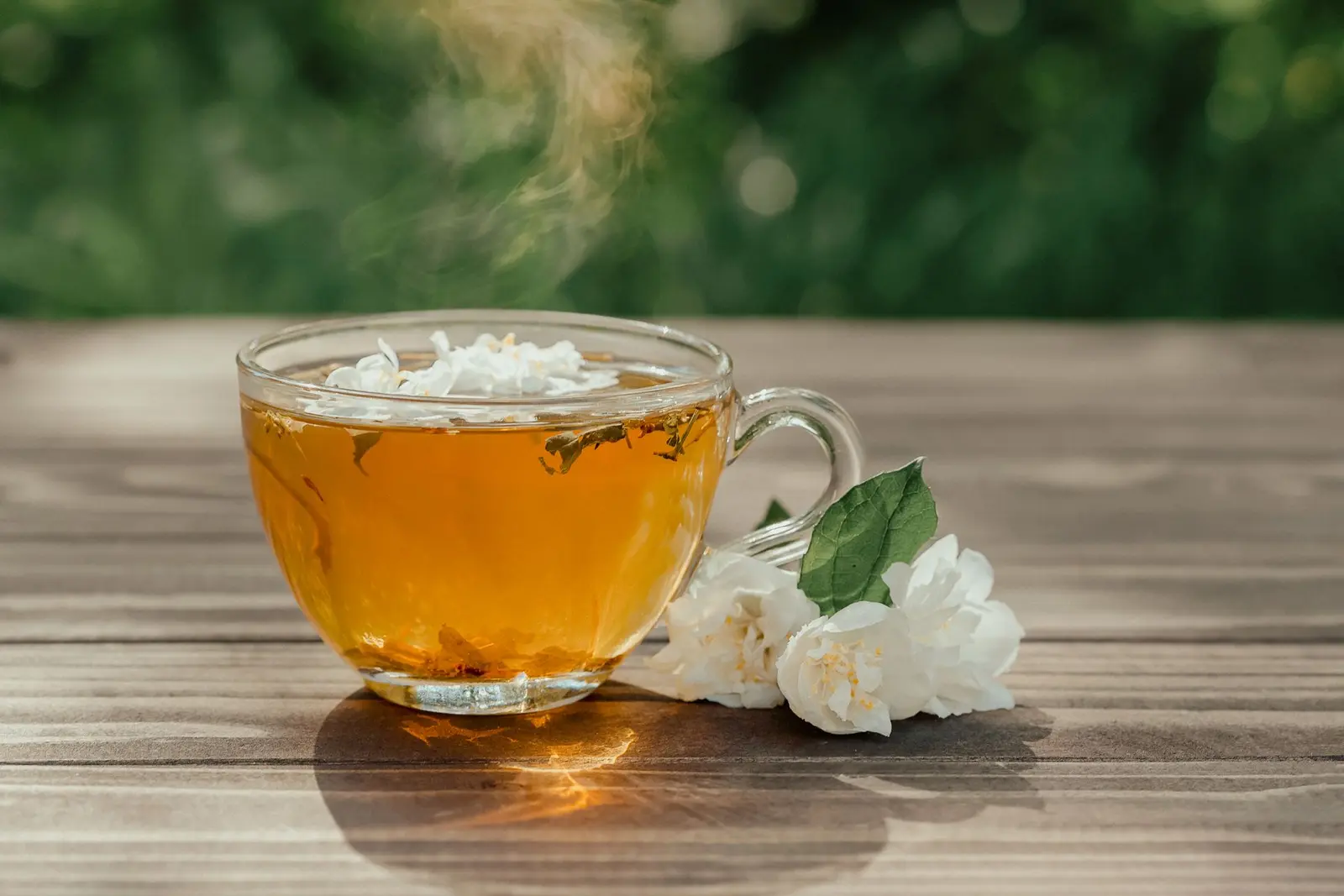
Jasmine tea is tea that has taken on the fragrance of jasmine flowers. Traditionally, the base is green tea, particularly from Fujian province in China, though other bases exist. Read more at the Jasmine tea entry on Wikipedia.
How jasmine tea is traditionally made
- Tea leaves are harvested and processed in the usual way for green tea, then stored.
- In the summer, when jasmine flowers bloom, they are picked in the afternoon, while still closed.
- At night, the flowers open and release their fragrance. They are layered with the tea leaves.
- The tea absorbs the aroma over several hours.
- The spent flowers are removed, and the tea is dried again.
- High-grade teas may be scented several times.
Some jasmine teas include a few dried blossoms for appearance; this is mostly decorative, and the aroma comes from the scenting process. Lower-priced products may be flavored with natural or artificial jasmine flavoring instead. Check the ingredients list. A label that reads “green tea, jasmine blossoms” or “green tea scented with jasmine” is closer to the traditional product.
Jasmine tea vs green tea at a glance
| Feature | Jasmine tea | Green tea |
|---|---|---|
| Base | Usually green tea | Green tea |
| Added element | Scented with jasmine blossoms | None (unless flavored) |
| Aroma | Floral, sweet, perfumed | Fresh, grassy, vegetal or nutty |
| Flavor | Delicate, floral, slightly sweet | Depends on type: sencha, Dragon Well, gunpowder, etc. |
| Caffeine | Yes (from the tea leaf) | Yes |
| Brewing temperature | 175–185°F (80–85°C) | 160–185°F (70–85°C) |
| Common forms | Loose leaf, pearls, tea bags | Loose leaf, bags, powder (matcha) |
| Best with | Light snacks, dim sum, after meals | Almost anything; plain |
Taste
Jasmine green tea smells sweet and floral, almost like perfume, and the taste is clean, light and smooth. A well-made jasmine tea balances the flowers with the tea’s own gentle bitterness. A poor one can taste soapy or artificial.
Plain green tea comes in many styles, from the brothy, marine taste of Japanese sencha to the toasty, chestnut flavors of Chinese pan-fired teas. If you like to understand how a specific style behaves, read our guides on water temperature for green tea and matcha vs green tea.
Caffeine
Jasmine tea made with a tea base has caffeine. The amount depends on the leaf, the quantity, the water temperature and the steeping time. Green tea in general has less caffeine than the same volume of brewed coffee. For comparisons, see caffeine in tea vs coffee.
Jasmine flowers alone, brewed as a herbal infusion, do not contain caffeine, but most products sold as “jasmine tea” contain tea leaves. If you want a caffeine-free option, look at our list of caffeine-free teas.
Jasmine pearls
Jasmine pearls (sometimes called dragon pearls) are young tea leaves and buds hand-rolled into small balls. They are scented with jasmine and slowly unfurl in hot water, making them attractive in a glass pot or cup. They are usually higher in price than basic jasmine tea, and quality varies. Look for tightly rolled, uniform pearls and a fresh floral smell.
How to brew jasmine tea
Jasmine green tea is delicate, so treat it like other green teas.
- Amount: about 1 teaspoon of leaves, or 4 to 6 pearls, per 8 oz (240 ml).
- Temperature: 175–185°F (80–85°C).
- Time: 2 to 3 minutes for the first steep.
- Re-steeps: quality jasmine tea gives 2 or 3 infusions. Add 30 seconds each time.
For general guidance, see how to brew loose leaf tea. If your tea tastes bitter, use cooler water and a shorter steep. For measuring, see how much tea per cup.
Jasmine iced tea
Jasmine tea is lovely cold. Brew it at double strength and pour it over ice, or cold brew it in the refrigerator for 6 to 8 hours. See our guide to how to make iced tea for details.
How to choose good jasmine tea
- Read the ingredients. Look for tea plus jasmine blossoms or “scented with jasmine.” Avoid products with only “natural flavors” if you want a traditional scent.
- Smell the leaves. A natural jasmine aroma is sweet and rounded rather than sharp or chemical.
- Check the base tea. Higher quality jasmine teas use better green tea leaves, often with visible buds.
- Buy fresh. Jasmine scent fades. Check the harvest or packing date.
- Consider loose leaf. More expressive than most bags. See loose leaf tea vs tea bags.
Storage
Store jasmine tea in an airtight, opaque container away from light, heat and other aromas. The floral scent is volatile and fades faster than the tea itself. See how to store loose leaf tea and aim to use jasmine tea within about 6 to 12 months.
Pairing jasmine tea
- Dim sum and light Chinese dishes.
- Fresh fruit, especially pear, peach and berries.
- Delicate pastries and shortbread.
- Light salads and sushi.
Is jasmine tea better than green tea?
Neither is “better.” Jasmine tea is a great choice if you enjoy floral aromas and a gentle, perfumed cup. Plain green tea is better if you want to taste the character of a specific leaf, or you do not like floral scents. Many people keep both.
Common mistakes
| Mistake | Fix |
|---|---|
| Using boiling water | Lower to 175–185°F |
| Steeping too long | 2 to 3 minutes |
| Choosing flavored jasmine with artificial taste | Pick scented tea with natural jasmine |
| Storing near other teas | Keep separate; jasmine scent travels |
| Throwing away leaves after one cup | Re-steep for more |
Health note
Jasmine green tea contains the same general plant compounds as other green teas, but this does not make it a treatment for any condition. For general information on green tea, you can consult the National Center for Complementary and Integrative Health. Speak with a healthcare professional about your own situation.
Jasmine tea cooking and mixing ideas
Jasmine tea adds a floral note to food and drinks. Steep it strongly and use it to poach pears or peaches, to make a light syrup for fruit salads, or to infuse cream for panna cotta. It also works as a base for iced tea with lemon, or as a mixer with sparkling water and a little honey. For cocktails, brew double-strength, chill, and mix with gin or vodka and citrus. Because jasmine aroma fades with heat, add it near the end of cooking.
Jasmine tea around the world
Jasmine tea is a staple at Chinese restaurants, where it is often served free with meals, and at dim sum houses. In its home region, it is also appreciated as a high-end tea, scented several times with fresh blossoms. In the United States, jasmine tea is widely available as bags, loose leaf and pearls, and in blends with other teas. If you have tried it only at restaurants, a high-quality loose jasmine pearl may change your idea of what the tea can taste like.
Choosing between jasmine and other scented teas
If you like jasmine, you may enjoy other scented teas, such as rose black tea, osmanthus oolong or lychee black tea. These use blossoms or fruit aromas to flavor tea, usually on a black or oolong base. Compare them with unscented teas to appreciate how scent changes the cup. For a broader introduction to green tea in general, read matcha vs green tea, and our complete guide to tea explains scented and flavored teas.
Summary
Jasmine tea is green tea with a floral scent, and it behaves like green tea in the cup: brew it at around 175–185°F, steep briefly and enjoy several infusions. Explore more flavors in the Green Tea & Matcha hub.
Frequently Asked Questions
Is jasmine tea green tea?
Most jasmine tea is green tea scented with jasmine flowers, so it is a type of green tea. Jasmine can also be added to white, oolong or black tea, but green is the traditional base.
How is jasmine tea made?
Fresh jasmine blossoms are layered with finished tea leaves. The flowers open at night and release their fragrance, which the tea absorbs. The process is repeated, and the spent flowers are usually removed before the tea is dried again.
Does jasmine tea have caffeine?
Jasmine tea made with green or other true tea leaves has caffeine, usually less than coffee. Jasmine flowers themselves do not contain caffeine, and jasmine herbal tisanes made only from flowers are caffeine-free.
What are jasmine pearls?
Jasmine pearls, or dragon pearls, are young green tea leaves hand-rolled into small balls and scented with jasmine. They unfurl in hot water, which is why they are popular for presentation and flavor.
How do I brew jasmine tea without it turning bitter?
Use water around 175–185°F (80–85°C), steep for 2 to 3 minutes, and do not use too many leaves. Re-steep the leaves for additional cups.
Want the bigger picture? Read our complete guide to tea or explore more in Green Tea & Matcha.