Key takeaways
- Tea's four enemies are air, light, heat and moisture, plus strong odors.
- Store loose leaf tea in an airtight, opaque container in a cool, dry cupboard.
- Tea rarely becomes unsafe, but it loses flavor; delicate green and white teas fade fastest.
- Avoid the refrigerator and freezer for everyday tea unless the tea is sealed against moisture.
Store loose leaf tea in an airtight, opaque container, in a cool, dry cupboard away from light, heat, moisture and strong smells. Done well, this keeps tea tasting fresh for months. Tea does not usually “go bad” like milk, but it slowly loses aroma and flavor, which is why proper storage is worth a few minutes.
What makes tea go stale
Tea is dried leaf, and dried leaf is sensitive. Five things work against it:
- Air (oxygen). Oxygen slowly changes the flavor compounds in tea, flattening the taste.
- Light. Sunlight and strong indoor light fade aroma and color, especially in green teas.
- Heat. Warm storage speeds up the breakdown of flavor. Cupboards over the stove or near a window are poor choices.
- Moisture. Humidity can cause the leaves to lose crispness and, in the worst case, grow mold.
- Odors. Tea absorbs smells easily. Spices, coffee, cleaning products and even a nearby fragrant tea can leave their mark.
Think of tea like spices: it is at its best when fresh, and it should be kept like something you want to taste in a few months.
The best containers for loose leaf tea
Metal tins
Tins with tight-fitting lids are a favorite because they are opaque and block light. Look for tins with an inner lid or a snug seal. Avoid containers that previously held strongly scented items, unless they are thoroughly washed and aired out.
Ceramic canisters
Ceramic jars with silicone gaskets or good-fitting lids are opaque and attractive. Make sure the seal is genuinely airtight.
Dark glass jars
Amber or other dark glass blocks light, and glass does not hold odors. Use a good gasket lid.
Resealable foil pouches
The pouches many specialty teas arrive in are often good: they are opaque, lightweight and cheap to replace. Press out extra air and fold the top over, or use a clip with a seal.
What to avoid
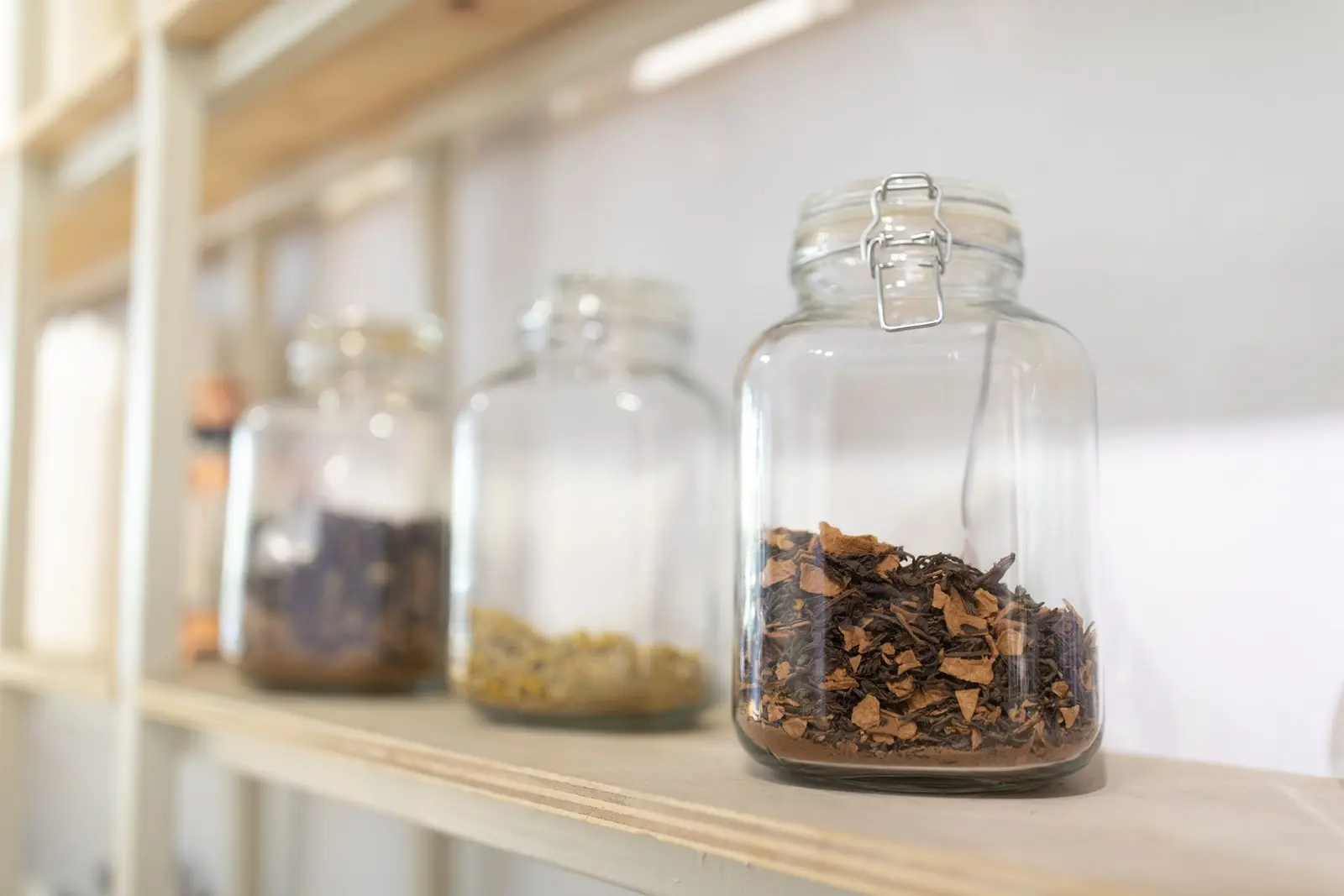
- Clear glass jars on a countertop. They look nice but expose tea to light.
- Open baskets or boxes. These let in air and humidity.
- Plastic containers that smell. Plastic can absorb or release odors.
- Containers much larger than the amount of tea. More empty space means more air.
Where to store tea
Choose a cool, dark and dry place with a steady temperature. A kitchen cupboard away from the stove, a pantry shelf, or a drawer in a living area all work. Avoid the area above or next to the oven, a sunny window, and the spot next to the dishwasher or sink, where humidity and steam are higher.
Should you store tea in the fridge or freezer?
For everyday tea, no. Moving a cold container to a warm kitchen can cause condensation inside when you open it, and that moisture harms the leaf. The refrigerator also contains many odors that tea will pick up.
Some enthusiasts freeze delicate teas, such as high-grade green teas, in vacuum-sealed packs for long-term storage and only open each pack once, after it has come fully to room temperature. This is a specialist approach and only makes sense if you buy larger quantities and can seal them properly.
How long does loose leaf tea last?
The “shelf life” of tea depends on type, quality and storage. These are general ranges for tea stored in good conditions:
| Tea type | Typical freshness window |
|---|---|
| Green tea (especially Japanese) | About 6 to 12 months |
| White tea | About 1 to 2 years, often longer for aged styles |
| Oolong (lightly oxidized) | About 1 year |
| Oolong (roasted) | Often 1 to 2 years |
| Black tea | About 1 to 2 years |
| Pu-erh | Can age for years; stored differently |
| Herbal blends | About 1 year, depending on ingredients |
| Flavored teas | Often 6 to 12 months, as added oils and fruit fade |
| Matcha | Best used within a few months of opening |
Check the package for dates. If it carries a “best by” date, treat it as a guide to quality rather than a hard safety deadline.
How to tell if tea has gone bad
Use your senses:
- Smell. Fresh tea smells aromatic. If the aroma is faint, flat, or smells musty, damp or like cardboard, it is past its best.
- Look. Check for visible mold, white fuzz or dampness. Discard any tea that shows mold.
- Taste. Stale tea tastes dull or papery but is usually not harmful. If it tastes sour or off, do not drink it.
Our guide to how to brew loose leaf tea explains how to evaluate flavor, and good storage keeps that flavor intact.
Tips for storing different kinds of tea
Green and white tea
These are the most delicate. Keep them in small, airtight, opaque containers and use them within a year. Buy smaller quantities if you drink them slowly.
Black tea
Black tea is the most forgiving but still benefits from an airtight tin. Strongly flavored black teas, such as Earl Grey, should be stored separately from plain teas to avoid transferring scent. Read more in our guides on Earl Grey and Assam vs Darjeeling.
Oolong
Rolled oolongs keep well in tins. Heavily roasted oolongs may improve for a time. Light oolongs should be consumed fresher.
Matcha
Matcha is powdered, so it oxidizes quickly. Keep it in its original sealed tin or pouch, tightly closed, and use it within a few months of opening. Our matcha vs green tea guide explains why.
Herbal blends and spices
Dried flowers and spices contain oils that fade. Store them airtight and use them within a year for the best flavor. Chai blends should be sealed tightly because spices scent everything around them. See how to make chai at home.
Buying tea in the right amount
Because tea fades, buy a quantity you can finish while it is fresh. If you buy in bulk to save money, divide it into smaller airtight containers and open only one at a time, so the main supply stays sealed.
Labeling and rotating
A small label on each tin with the tea name and the date you bought or opened it prevents guessing. Use the oldest tea first, a method known as first in, first out.
Storing brewed tea
Brewed tea is different from dry leaf. Keep it covered in the refrigerator and drink it within about 3 to 5 days. For more, see how to make iced tea.
Common storage mistakes
| Mistake | Better choice |
|---|---|
| Clear jar on the counter | Opaque tin in a cupboard |
| Storing near the stove | Cool, dry shelf |
| Mixing several teas in one container | Separate tins, labeled |
| Leaving the pouch open | Press out air and reseal |
| Keeping tea next to spices and coffee | A dedicated tea shelf |
| Using the refrigerator | Cupboard at room temperature |
A simple storage setup for a small collection
You do not need fancy storage to keep tea fresh. A practical setup for a home collection looks like this:
- A dedicated cupboard or drawer that is cool, dark and away from the stove, sink and dishwasher.
- Small airtight tins, each holding a few weeks to a few months of one tea.
- A label on each tin with the tea’s name and the date you opened it.
- A backup stock that stays sealed in its original pouch until needed, tucked in the same cupboard.
- A scoop or spoon that you keep dry and clean, never used for anything else.
When you open a tin, work quickly, scoop what you need and close it again. Avoid leaving the lid off while the kettle boils, because steam is a source of moisture.
Traveling with tea
For trips, transfer a few days’ worth of tea into a small airtight container or reusable zip bag. Pack it away from strongly scented items. If you are flying, tea leaves are generally allowed in carry-on bags in the United States, but check current guidance from the Transportation Security Administration, because rules change.
What about vacuum sealing?
Vacuum sealing can help with long-term storage of large quantities, especially for delicate teas, because it removes most of the air. Use it for stock you will not touch for a while, and open each pack only once. Vacuum sealing is not necessary for everyday tea in a tin, and it will not rescue tea that was already stale when sealed.
Storing tea bags, matcha and chai blends
Tea bags are more convenient but still fade. Keep them in their original foil sleeve or in an airtight container. Matcha should be stored airtight and cool, and used within a couple of months of opening; see matcha vs green tea. Spiced blends such as masala chai should be sealed tightly, since spices scent everything nearby. If you are making your own, see how to make chai at home.
Quick checklist
- Airtight, opaque container.
- Cool, dark, dry place.
- Keep away from strong odors.
- Buy fresh, buy only what you will use, and label the date.
- Discard anything musty or moldy.
For a broader introduction to the main kinds of tea, see our complete guide to tea.
Frequently Asked Questions
Does loose leaf tea expire?
Tea does not usually spoil in a dangerous way if kept dry, but it loses aroma and flavor over time. Many packages carry a best-by date. Always discard tea that smells musty or shows any sign of mold.
How long does loose leaf tea last?
Stored well, many black, oolong and herbal teas stay pleasant for a year or more, while green and white teas are best within about 6 to 12 months. Pu-erh is an exception and can be aged on purpose. These are general ranges, not guarantees.
What is the best container for loose leaf tea?
An airtight, opaque container made of metal, ceramic or dark glass is best. Choose a size close to the amount of tea so there is little extra air inside.
Can I store tea in the refrigerator or freezer?
Generally no. Cold containers can cause condensation when opened, and tea absorbs odors from other foods. Only vacuum-sealed or well-sealed tea intended for long storage should go in cold storage.
Can I keep different teas together?
Do not mix them in one container, and avoid storing strongly scented teas such as Earl Grey or jasmine next to delicate ones, because the aromas can transfer.
Want the bigger picture? Read our complete guide to tea or explore more in Brewing Guides.