Key takeaways
- Use about 1 teaspoon of loose tea per 8 oz (240 ml) cup, then adjust to taste.
- Match water temperature to the tea: hotter for black and herbal, cooler for green and white.
- Start with the time on the package, taste early, and change one variable at a time.
- You do not need special gear: a mug and a fine strainer will work.
To brew loose leaf tea, use about 1 teaspoon of leaves per 8 oz (240 ml) cup, pour over water heated to the right temperature for that tea, steep for 2 to 5 minutes, then strain the leaves out. Black and herbal teas like hot water near 212°F (100°C); green and white teas prefer cooler water. That is the whole method, and the rest of this guide explains how to fine-tune each step.
Why loose leaf tea tastes different
Loose leaf tea is usually made of larger pieces of leaf than the fine fragments often found in standard tea bags. Whole or large leaves have room to unfurl in the water, which gives the flavors more space to develop. Our guide to loose leaf tea vs tea bags goes deeper into the differences. For now, the practical point is that loose tea rewards a little care with measuring, temperature and time.
If you are new to the different families of tea, our complete guide to tea explains black, green, oolong, white and herbal teas and how each one behaves in the cup.
What you need
You can brew a very good cup with simple tools:
- Loose leaf tea.
- Fresh, cold water (filtered if your tap water has a strong taste).
- A kettle or any pot for heating water. A variable-temperature electric kettle is convenient but optional.
- A way to separate the leaves: a basket infuser, a teapot with a built-in filter, a French press or a fine strainer. See our guide to the best tea infusers.
- A mug or teapot.
- A timer. Your phone will do.
Step 1: Measure your loose leaf tea
A reliable starting ratio is 1 teaspoon (roughly 2 to 3 grams) of tea per 8 oz (240 ml) of water. Light, fluffy teas such as some white teas or large-leaf oolongs take up more room, so a heaping teaspoon or even a tablespoon may weigh about the same. A small kitchen scale removes the guesswork.
| Tea type | Starting amount per 8 oz cup |
|---|---|
| Black | 1 level teaspoon |
| Green | 1 level teaspoon |
| White | 1 to 2 teaspoons (bulky leaves) |
| Oolong | 1 to 2 teaspoons |
| Herbal blends | 1 to 2 teaspoons |
For a detailed breakdown, read how much tea per cup.
Step 2: Heat the water to the right temperature
Water temperature changes flavor. Hot water extracts more from the leaf quickly, which suits robust teas but can make delicate teas taste harsh.
| Tea type | Water temperature | Steeping time |
|---|---|---|
| Black tea | 200–212°F (93–100°C) | 3–5 minutes |
| Green tea | 160–185°F (70–85°C) | 2–3 minutes |
| White tea | 175–185°F (80–85°C) | 2–4 minutes |
| Oolong tea | 185–205°F (85–96°C) | 3–5 minutes |
| Herbal infusion | 212°F (100°C) | 5–7 minutes |
These are widely used guidelines, not laws. Always check the package, because producers know their leaves best.
No thermometer? Use this trick
Bring the water to a boil, then let it sit with the lid off. After about a minute it will be close to 200°F (93°C). After two or three minutes it will be near the range suited to green tea. Our article on water temperature for green tea covers this in more detail.
Step 3: Combine and steep
Place the leaves in your infuser or teapot and pour the water over them. Start the timer immediately. Give the leaves room to move: if your infuser is tiny and the leaves are packed tight, the tea will taste weak and uneven.
Cover the cup or pot while it steeps. This keeps the heat in and holds the aroma close.
Taste early
Start with the low end of the recommended time and taste. If the tea is too light, steep a little longer next time. If it is bitter or astringent, shorten the time or lower the temperature. Change only one variable at a time so you know what caused the difference.
Step 4: Strain and serve
When the time is up, lift out the infuser or pour the tea through a strainer. Do not leave the leaves sitting in the water, because tea keeps extracting and can turn bitter. If you are making a pot for several people, pour all of it into a second warm vessel or into cups so it does not over-steep.
How to brew loose leaf tea without an infuser
You do not need to buy anything to start:
- Put the leaves straight into a mug or a heatproof jug.
- Add the water and steep.
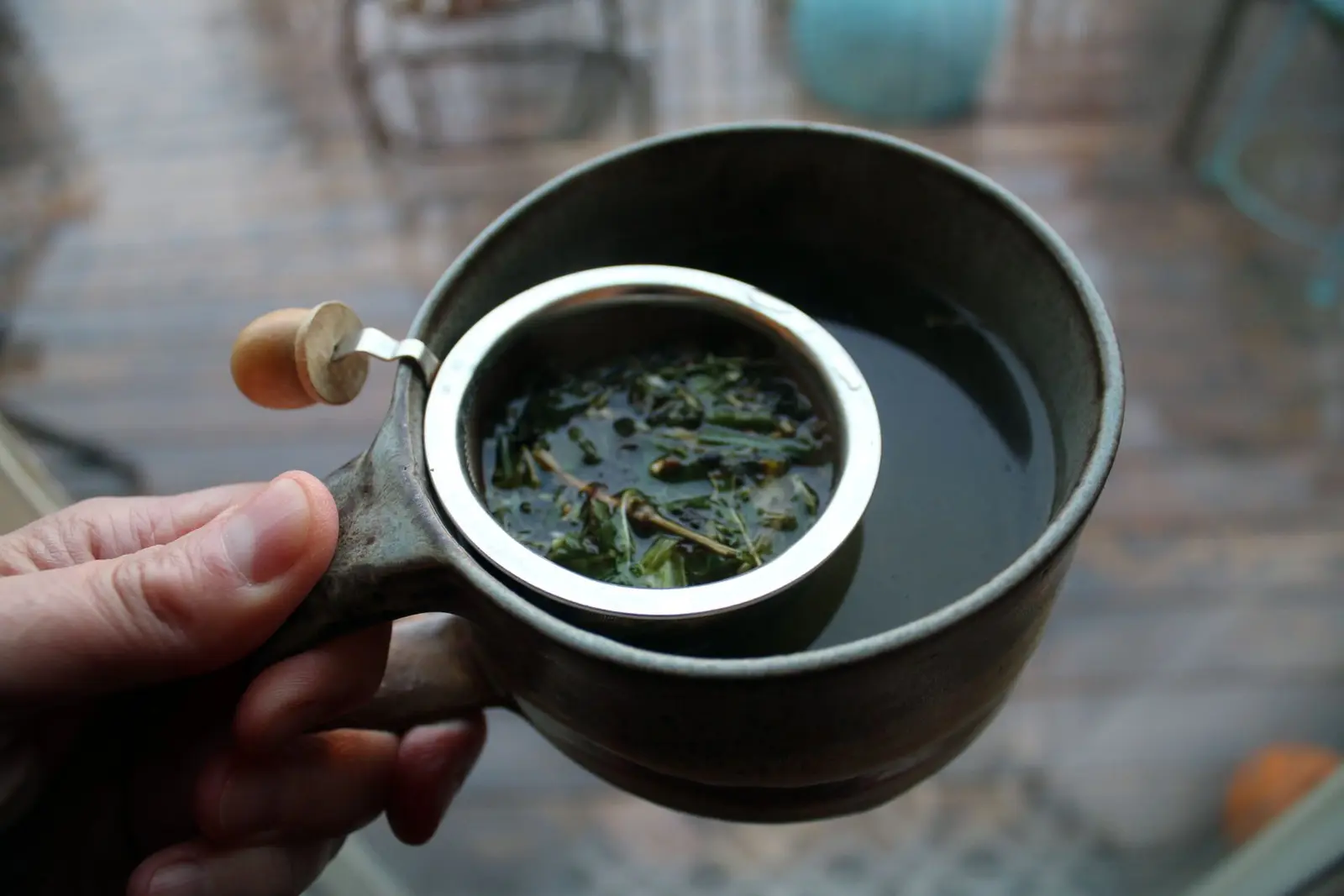
- Pour the tea through a fine-mesh kitchen strainer into your cup.
Other options include a French press (press the plunger when the time is up) or a simple paper filter set in a funnel. Whole leaves are easy to strain. Finer or broken leaves need a finer mesh.
Re-steeping: getting more from the same leaves
Good loose leaf tea often gives more than one cup. Oolong, white and green teas in particular can be re-steeped. Use a similar temperature and add 30 to 60 seconds to the time on each additional infusion. Black teas usually give a good second cup but fade faster. Herbal blends vary.
Common mistakes and quick fixes
- Water too hot for green tea. Cool it for a minute or two before pouring.
- Too many leaves. Cut the amount slightly.
- Steeping without a timer. A few extra minutes can change the cup completely.
- Old or stale tea. Tea loses aroma over time; see our guide to how to store loose leaf tea.
- Strong-tasting water. Use filtered water for a cleaner flavor.
Brewing different styles
Brewing loose leaf tea for iced tea
Brew it stronger than usual (use more leaves or a slightly longer steep) and pour over ice, or steep in cold water in the refrigerator for several hours. Our guide to how to make iced tea covers hot-brew and cold-brew methods.
Brewing loose leaf chai
Masala chai is traditionally simmered with milk and spices rather than steeped like a delicate tea. See how to make chai at home.
Brewing herbal tea
Herbal infusions are not made from the tea plant. Use water at a full boil and steep a little longer, often 5 to 7 minutes. Read about caffeine-free tea options.
A worked example: brewing a pot for two
Suppose you want to brew a small pot of black tea for yourself and a friend. The pot holds about 16 oz (475 ml), so you need roughly 4 to 6 grams of tea, which is about 2 teaspoons of a standard black tea. Warm the pot with a splash of hot water and pour it out, because a cold pot can drop the temperature of the brew by several degrees. Add the tea, pour in water at about 205°F (96°C), cover the pot and set a timer for 4 minutes. At 4 minutes, pour both cups in one go so the last cup is not over-steeped, or pour everything into a second warm vessel.
If you want a second pot from the same leaves, add about 30 to 60 seconds to the steeping time. Oolong and green teas often give better second infusions than black tea, so for those you may see the flavor develop rather than fade.
How to tell what your tea needs
Good tea brewing is a conversation between you and the leaf. These cues help you decide what to change:
| What you notice | What it tells you | What to try |
|---|---|---|
| The tea is pale and tastes of water | Too little leaf, water too cool, or too short a steep | Add leaf first, then raise the temperature a little |
| The tea is dark and puckering | Too much leaf, water too hot, or too long | Cut the time by 30 seconds or lower the temperature |
| The aroma is sharp and thin | Possibly stale tea | Compare with a fresh tin |
| The first sip is good but the finish is bitter | Slight over-extraction | Shorten the steep next time |
| The tea tastes sour or sharp | Under-extraction, often cool water with black tea | Use hotter water or steep a little longer |
Keep a simple note on your phone for each new tea: leaf amount, temperature, time and what you thought. After a few brews you will know your preferred recipe for that tea without needing to look it up.
Does the vessel matter?
A little. Thin glass and metal lose heat quickly, while thick ceramic and cast iron hold it. For delicate teas, a preheated vessel prevents sudden drops in temperature. For large-leaf teas, a wide vessel gives the leaves room to move. If you often make tea at your desk, a mug with a lid helps keep the heat in and the aroma close. Our guide to the best tea infusers goes through the practical differences.
Quick reference
- Measure: 1 teaspoon per 8 oz.
- Heat water to suit the tea.
- Steep, covered, and taste early.
- Strain promptly.
- Re-steep good leaves.
For authoritative background on the tea plant itself, see the overview of tea on Wikipedia.
Frequently Asked Questions
How do I brew loose leaf tea without an infuser?
Put the leaves directly in a mug or pot, pour in the water, steep, then pour through a fine-mesh kitchen strainer into your cup. You can also steep in a French press and press the plunger when the time is up.
How long should I steep loose leaf tea?
Most black teas take 3 to 5 minutes, green teas 2 to 3 minutes, white teas 2 to 4 minutes, oolong 3 to 5 minutes and herbal infusions 5 to 7 minutes. Follow the package first, then adjust.
Can I use the same loose leaves more than once?
Yes. Many quality teas, especially oolong, green and white, can be steeped several times. Increase the steeping time slightly with each infusion.
What is the ratio of loose leaf tea to water?
A common starting point is 1 teaspoon (about 2 to 3 grams) per 8 oz (240 ml) of water. Bulky leaves such as some oolongs or herbal blends may need more by volume.
Why does my loose leaf tea taste bitter?
Bitterness usually comes from water that is too hot, steeping too long, or using too many leaves. Lower the temperature, shorten the time, or use fewer leaves.
Want the bigger picture? Read our complete guide to tea or explore more in Brewing Guides.