Key takeaways
- Assam is bold, malty and full-bodied; Darjeeling is lighter, floral and often described as muscatel.
- Assam suits milk and sugar, breakfast blends and chai; Darjeeling is usually enjoyed plain.
- Both are Indian teas from the Camellia sinensis plant but grown in different regions and climates.
- Brew Assam hotter and a little longer, and Darjeeling slightly cooler and shorter.
Assam is a bold, malty, full-bodied black tea from the lowlands of northeastern India, while Darjeeling is a lighter, more delicate and aromatic tea from the Himalayan foothills in West Bengal. Choose Assam if you want a strong cup that stands up to milk and sugar, and choose Darjeeling if you prefer a subtle, floral cup enjoyed plain.
Both are named after the places where they grow, and both come from the same plant species. The differences come from climate, elevation, plant varieties and processing.
Where Assam and Darjeeling come from
Assam
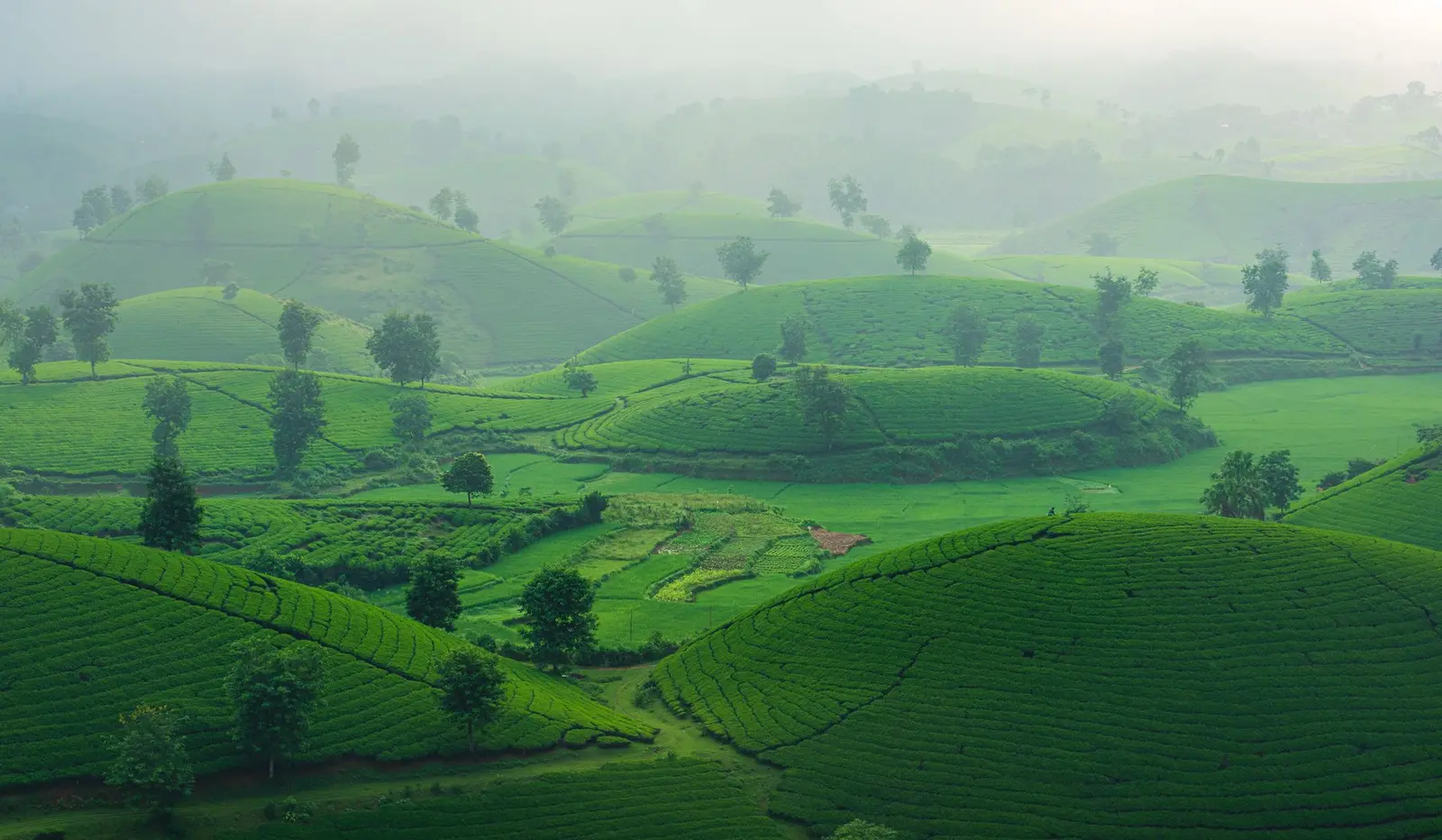
Assam is a state in northeastern India, in the Brahmaputra River valley. The region has warm, humid conditions and low elevation, which suit the Assam variety of the tea plant. It is one of the largest tea-growing regions in the world. Read more on the Assam tea page on Wikipedia.
Darjeeling
Darjeeling is in West Bengal, in the foothills of the Himalayas. The tea is grown on steep hillsides at high elevation, in a cooler, misty climate with distinct seasons. Because of the conditions, yields are lower and the leaves develop delicate aromas. See the Darjeeling tea entry on Wikipedia for more. “Darjeeling” is a geographically protected name, meaning authentic Darjeeling tea must be grown in that region.
For a wider introduction to the tea plant and its regions, see our complete guide to tea.
Assam vs Darjeeling at a glance
| Feature | Assam | Darjeeling |
|---|---|---|
| Region | Northeastern India, Brahmaputra valley | West Bengal, Himalayan foothills |
| Elevation | Low | High |
| Flavor | Malty, rich, sometimes slightly sweet | Floral, fruity, often muscatel |
| Body | Full | Light to medium |
| Color in the cup | Deep reddish-brown | Pale gold to amber |
| Best with | Milk, sugar, breakfast, chai | Plain, perhaps lemon |
| Common uses | English breakfast and chai blends | Single-estate, afternoon tea |
| Brewing | Hotter, slightly longer | Slightly cooler, shorter |
| Price | Typically more affordable | Often higher, especially single estates |
Taste and aroma
Assam
Assam teas are known for a rich, malty flavor, a brisk finish and a strong, coppery color. Some have notes of honey, molasses or baked bread. They are bold enough to pair with milk and sugar, which is why Assam is a main component of many breakfast blends and a classic base for chai. See how it works in our recipe for chai at home.
Darjeeling
Darjeeling is often called the “champagne of teas,” a nickname that reflects its prestige. The flavors are lighter and more complex, with floral, fruity and sometimes grape-like notes known as muscatel. The seasonal harvest (called flushes) changes the character:
| Flush | Season | Typical character |
|---|---|---|
| First flush | Spring | Light, bright, green, floral |
| Second flush | Early summer | Fuller, amber, muscatel |
| Monsoon (rain) flush | Summer | Stronger, less delicate |
| Autumnal flush | Autumn | Mellow, coppery, smooth |
How to brew Assam
- Amount: 1 teaspoon per 8 oz (240 ml). Use a bit more for strong tea.
- Water: 205–212°F (96–100°C).
- Time: 3 to 5 minutes.
- With milk? Yes. Add milk after steeping.
How to brew Darjeeling
- Amount: 1 teaspoon per 8 oz, perhaps slightly more for first flush because the leaves are bulky.
- Water: about 195–205°F (90–96°C). First flush benefits from the cooler end.
- Time: 2 to 4 minutes, depending on the flush.
- With milk? Usually plain; add lemon if you like.
Both teas follow the general method in our guide to how to brew loose leaf tea. For measuring help, see how much tea per cup.
Caffeine
Both are black teas and contain caffeine. The actual amount per cup depends on the leaf, the amount used, the water temperature and the steeping time, not just the region. Assam, brewed strong, may deliver more caffeine per cup, but there is no guaranteed difference. To compare black tea with coffee, see caffeine in tea vs coffee.
Which should you buy?
Choose Assam if you:
- Want a strong, robust morning tea.
- Add milk and sugar.
- Plan to make chai or a hearty iced tea.
- Prefer a lower price per cup.
Choose Darjeeling if you:
- Enjoy delicate, aromatic teas.
- Drink tea plain.
- Want to explore single-estate or seasonal teas.
- Are looking for a gift or a special occasion tea.
If you are unsure, buy a small amount of each and taste them side by side.
Blends and misconceptions
- Many English breakfast and Irish breakfast blends contain Assam as a main ingredient.
- Earl Grey blends often use Chinese, Indian or Ceylon teas; see Earl Grey tea.
- Some products labeled “Darjeeling” are blends that include other teas. Look for labels that mention the estate or the harvest year, and consider reputable sellers.
- Some think Darjeeling is “better” than Assam. It is not better, just different.
Storing Assam and Darjeeling
Keep both in airtight, opaque containers away from light, heat and strong odors. Darjeeling, especially first flush, fades faster because it is more delicate. Our guide to how to store loose leaf tea explains how.
Pairing ideas
- Assam: toast, hearty breakfasts, biscuits, spiced cakes.
- Darjeeling: scones, cucumber sandwiches, light pastries and fruit.
How to taste the difference side by side
The best way to understand Assam and Darjeeling is to taste them together. Brew each with the same amount of leaf (about 1 teaspoon per 8 oz), using water at about 205°F (96°C) for Assam and 195–200°F (90–93°C) for Darjeeling, and steep for 3 to 4 minutes. Pour each into a clear cup if you can. Look at the color first: Assam is usually deeper and more reddish, while Darjeeling is typically paler and more golden.
Smell the cups before you sip. Assam often smells malty, like toasted bread or molasses. Darjeeling may smell floral or fruity. Sip slowly and notice the body: Assam feels fuller and rounder, and Darjeeling feels lighter and more tingly. Then add a splash of milk to a second cup of each. Assam keeps its character, while Darjeeling often loses its delicate notes. That experiment explains why the two teas are used so differently.
Other Indian teas worth knowing
Two other Indian regions are good to explore once you have tried Assam and Darjeeling. Nilgiri teas from southern India are bright, smooth and aromatic and make excellent iced tea. Dooars and Terai teas, grown near Darjeeling and Assam, are often used in blends and offer good value. If you enjoy spiced tea, see how robust Indian teas work in our recipe for chai at home. To compare with other black teas, read about Earl Grey tea, which can use Indian, Chinese or Sri Lankan bases.
Buying tips
When you shop for Assam or Darjeeling, check whether the label names an estate, a flush and a harvest year. These details suggest the seller knows the tea. For Assam, look for descriptions such as “orange pekoe,” “golden tips” or “second flush,” which hint at leaf style and season. For Darjeeling, be wary of very low prices for “first flush” tea, since genuine first flush is a limited seasonal product. Buy in small quantities, because Darjeeling in particular loses its aroma, and store it as described in how to store loose leaf tea.
Summary
Assam is bold, malty and best with milk. Darjeeling is delicate, floral and best plain. Both are excellent examples of what Indian black tea offers. Explore more in the Chai & Black Tea hub.
Frequently Asked Questions
Which is stronger, Assam or Darjeeling?
Assam is generally stronger and more full-bodied, with a deep color and malty taste. Darjeeling is lighter, more delicate and more aromatic.
Can I put milk in Darjeeling tea?
You can, but milk can mask its subtle flavors. Most people drink Darjeeling plain or with a slice of lemon. Assam handles milk and sugar much better.
Which has more caffeine?
It varies by leaf, grade and brewing. Assam is often brewed stronger, so a typical cup may contain more caffeine, but there is no fixed difference.
Is Darjeeling a black tea?
Mostly yes, but Darjeeling produces several styles, including green, white and oolong teas. Most of what is sold as Darjeeling is black tea, with first flush Darjeelings often lightly oxidized.
What is first flush Darjeeling?
First flush is the first harvest of the year, picked in spring. It is usually lighter, greener and more floral than the later second flush, which tends to be fuller and more amber with a muscatel note.
Want the bigger picture? Read our complete guide to tea or explore more in Chai & Black Tea.